Expressionism: Sharing Your Emotions

Art inspired by Paul Klee's self-portrait, "Senecio"

The early 20th Century brought the world an array of experimentation in the visual arts, which included Expressionism. This art form had its beginnings in Germany, as artists were exploring new techniques that expanded beyond the Impressionism movement. “Der Blaue Retier” was a second group of expressionists, who used exaggerated imagery and lines, darker colors, wild brush strokes and depicted
emotion.

Paul Klee is an artist featured in Abrakadoodle’s art program for children, and he was a notable Expressionist. Klee was born in Switzerland and played violin. Music was an important part of his visual arts creations. He later moved to Germany, where he joined with artist friend Wassily Kandinsky to teach expressionist technique to art students. Abrakadoodle art students enjoy creating art in Klee’s style using simple lines and shapes with bold color.

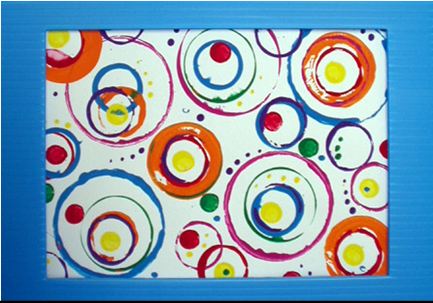
Art inspired by Kandinsky’s “Concentric Circles”

Wassily Kandinsky is also an artist featured in Abrakadoodle’s art program, and he, too, was an important artist in the Expressionist movement. Born in Russia, Kandinsky like Klee also moved to Germany to explore his passion for art. Children in Abrakadoodle’s art program love to create art in Kandinsky’s fun style.

Encourage your child to create a piece of art that expresses emotion. The expressionist style makes use of simple shapes, lines and bold color. For younger children, you can encourage them to work with one or two simple shapes of different sizes and thickness. Start with larger shapes and encourage your child to create shapes within shapes. Play with color and suggest your child to select colors that make him/her happy! Older children may wish to experiment with abstract expressionism by creating an image, such as the head shown above, that connects shapes to make an interesting image. For instance, a circle can be bisected and additional shapes can be added and emphasized with color. Art is such a wonderful way for children to express themselves!

Art Nouveau: A Swirling Style with Lasting Impact

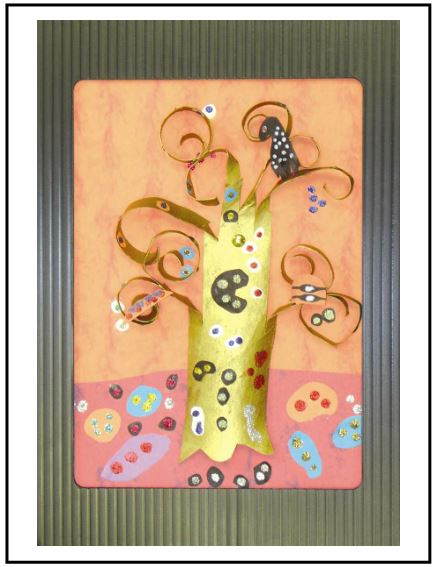
Abrakadoodle's version of Klimt's "Tree of Life"

Abrakadoodle art students love to creat art in the style of 19th century artist Gustav Klimt of Vienna, Austria. He was the founder of the Art Nouveau movement in Austria, which came to be called the Vienna Secession. His art featured lots of patterns, and he loved to paint pictures of trees, flowers and nature using swirls, curvy lines and lovely colors. Shown right is an Abrakadoodle version of Klimt’s “Tree of Life” artwork.

Art Nouveau came into popularity in the late 1800′s and early 1900′s and was distinguished by dynamic, flowing lines and the use of often intricate patterns. Art Nouveau used new materials, machine surfaces and abstraction. The Art Nouveau style is said to be a forerunner of such innovative 20th century movements as expressionism, cubism, surrealism and art deco.

Making arty letters is a fun activity for kids!

Try making an Art Nouveau design at home! All you need is some sturdy art paper, a pencil, crayons, markers or paints. A simple yet fun idea is to start with your child’s first initial of his or her name. For young children, you can use a stencil or trace the letter. Older children will enjoy creating their own — perhaps a big bubble letter or a swirling script style letter. From there, your child can add swirls, curved lines or patterns to give the letter a special design. The possibilities are endless for adding favorite flowers or animals or polka dots in whatever colors your child chooses. They may even like to add some embellishments, such as glitter or pom-poms that you have on hand. Let your child’s imagination flow!