Art for Kids is a Tasty Treat

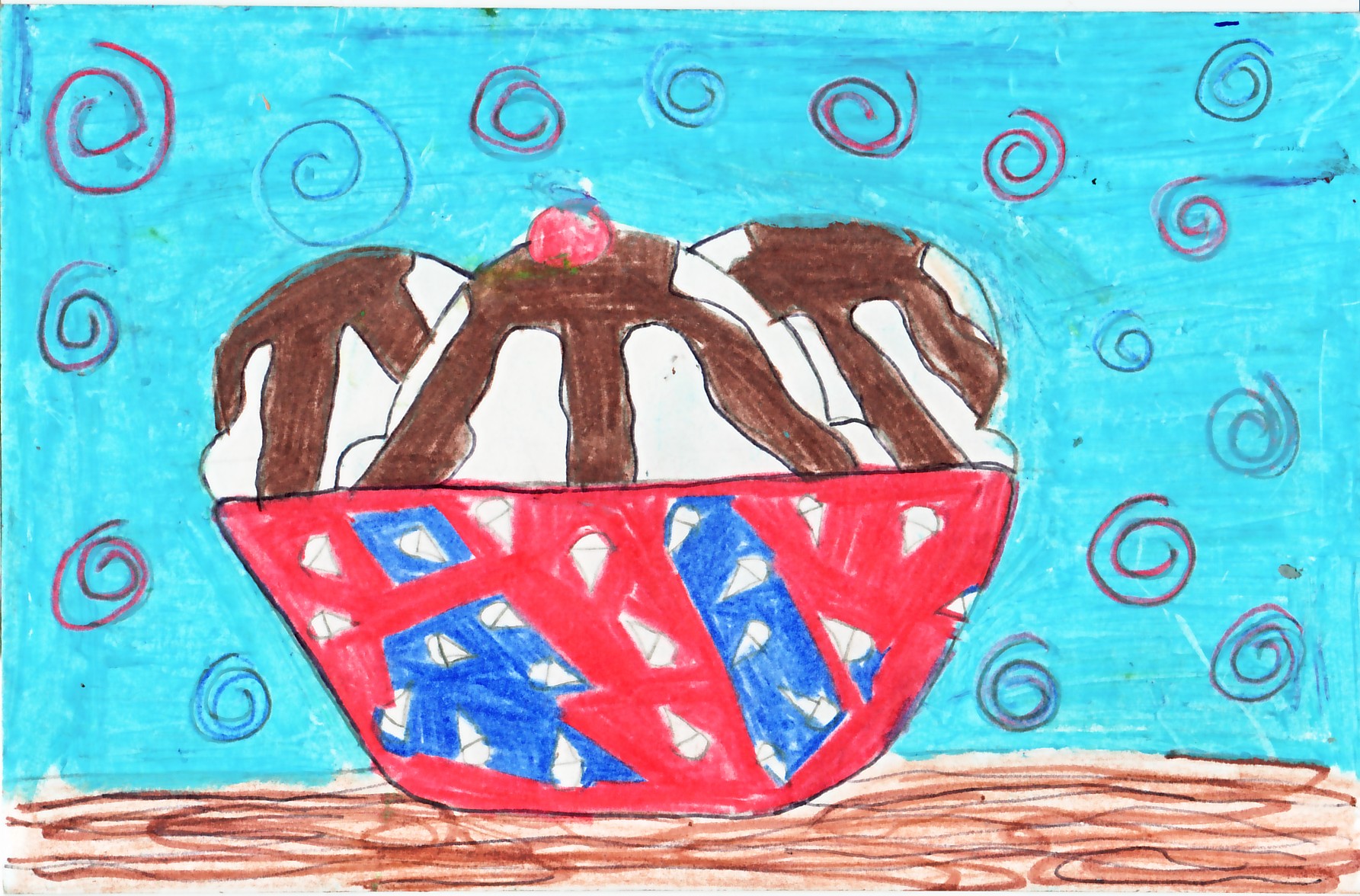
Tasty art by Mauja, age 12 of Detroit, Michigan

Art is such a fun way for children to express ideas from their imaginations. Sometimes your child will ask, “What should I draw?” Challenge your child to draw something they really such as ice cream sundaes or playing the guitar! Encourage your child to depict an image that is full of detail, using colors that your child loves.

Before your child sets to work, you may wish to discuss the possible form and structure for subject of the piece, so that your child can tap her mind’s eye to determine how the art can take shape. Talk about it! The ground squirrel that has captured your child’s fancy has almond shaped eyes. What might that look like? How about those tiny triangle shaped ears? Are its legs short or long? Describe its tail. Confidence grows as your child can envision how his idea will materialize.

Music-inspired montage by Claudia, age 13 of Detroit, MI

Older children may enjoy weaving a favorite image into a unique art form, such as abstract art in which a composition integrates form, color and line. Abstract art is not realistic but often uses symbolism. Younger children might enjoy using a favorite image in a creative collage that can make use of texture, objects from nature and related photos or magazine clippings. Ask questions about your child’s finished product and keep the creative juices flowing!

Capturing Child-Like Wonder: Naïve/Primitive Art

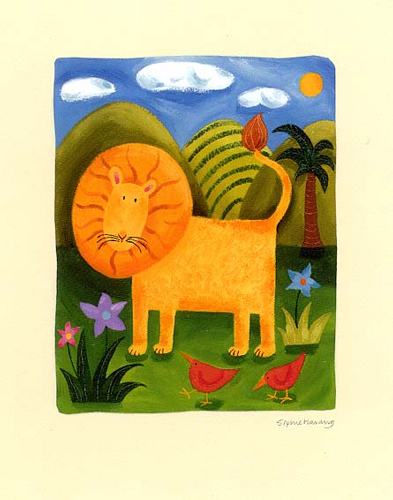
"Leo the Lion" by Sophie Harding

I find that Naïve Art is big on charm. The “Primitive” part of the art is appealing, with its simple lines; strong colors; flat subjects and two dimensions.  Don’t be fooled, though, into thinking that this child-like magic is in any way simplistic. Abrakadoodle incorporates this wonderful art style into our instructional programs for children.

Our students love exploring Naïve art by Sophie Harding, a multi-talented artist from Southern England. She paints, illustrates children’s books, as well as designs textiles. Her Primitive Art is absolutely endearing, featuring such child favorites as jungle and farm animals, fairies, bugs, dinosaurs and much more! By using simple shapes, vivid colors and imagination, Abrakadoodle artists can create their own treasured art in her style!

Henri Rousseau loved to create jungle scenes

Abrakadoodle students also delight in the art of Henri Rousseau, the self-taught French painter who created whimsical jungle scenes, even though he never actually traveled to a jungle! Rousseau did observe plant and animal life, however, and he was able to draw upon his vivid imagination to produce colorful creations that inspire a sense of wonder.

Encourage your child to make art in the Primitive style. How about a creative critter? For younger children, you can start with a stencil of shapes. Choose a favorite animal, and then talk about the shapes that your child can use to create it. Start with the head and then draw the body and appendages. Use a pencil, so that your young artist can edit his/her work, as all artists do. Once the animal is made, ask your child how it can be embellished. Does it need whiskers or stripes or a tail? Next, add to its surroundings. Would flowers or trees or hills or plants add to the scene? Finally, add color! Have your child discuss his/her artwork. Cultivate creativity and nurture your child’s adventures in self-expression!