Art Helps Kids Access the Sun, Moon, Stars

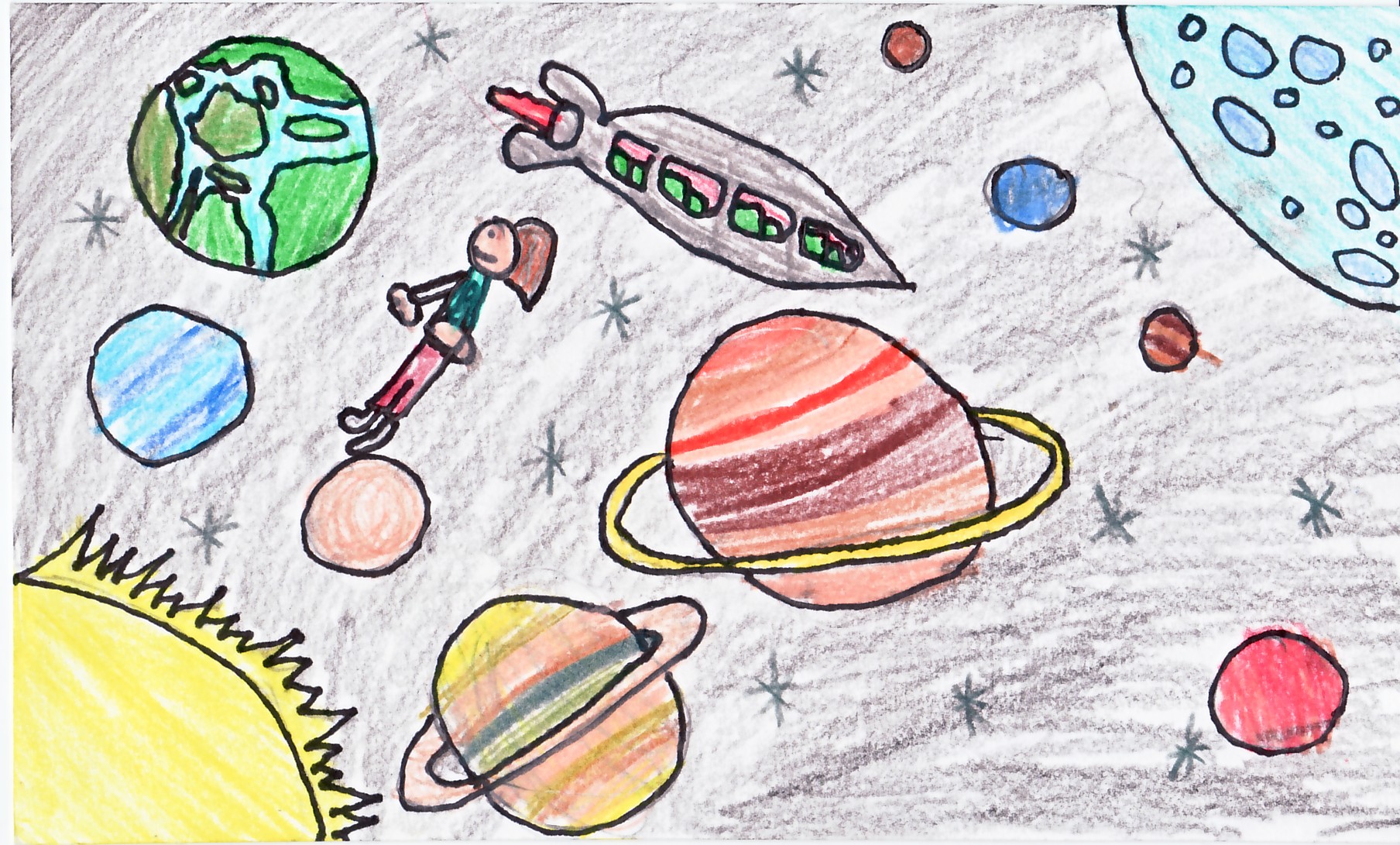
Original art by Nia, age 9 of Michigan

We all want to help our children reach for the stars and shoot for the moon! Art is such a wonderful way for kids to express themselves, while developing such important skills as creativity and problem-solving. Art – whether in creation or appreciation – entails learning to see, interpret and understand. Children can translate their internal vision or depict images based upon external sources of inspiration, both of which provide young artists with material to draw upon and feed into their art practice.

Original art by Shantrice, age 13 of Michigan who write of her art, “Darkness falls; light revolves”

Explore your child’s unique view! Provide your child with some basic supplies, such as blank paper, pencils, markers and crayons. Strike up a conversation about the stars, moon, planets, as well as our sun and sky. Connect with your child’s natural enthusiasm and clever ideas by encouraging him/her to create art that captures these unique imaginings.

Abrakadoodle Students Score in Creativity Testing

Quote

Abrakadoodle students develop important creativity skills!

Abrakadoodle conducted research during the 2011-2012 school year to determine if students exhibited gains when participating in the Abrakadoodle Art Education Program. Abrakadoodle provides a total art curriculum, art instruction conducted by an Abrakadoodle trained teacher and art materials at charter schools and private schools around the country. Students who were new to the Abrakadoodle program were tested in the fall and then again after participating in the Abrakadoodle program for seven months. The Educational Resource Group administered the Torrance® Tests of Creative Thinking. Fifty-two (52) second and fifth grade students from diverse backgrounds took part.

Overall grade scores for the entire group increased by 7 percentage points, as the scores related to the national averages.  Most dramatic results were apparent among the fifth grade students, who had scored significantly below the national averages in the pretest. In addition to the Abrakadoodle Art in Our World Curriculum and Education Program, fifth graders had participated in Abrakadoodle’s Creativity Boost™ Exercises.

The highly reliable Torrance® Tests of Creative Thinking TTCT are the most widely used tests of their kind.  Students in this study participated in the Figural TTCT Forms A and B: Thinking Creatively with Pictures, which includes exercises to assess five characteristics related to creative thinking. Scoring was based upon grade-related norms.  The TTCT is most widely used to determine eligibility for talented and gifted programs. Normative data has been gathered from more than 55,000 students in the US and Canada. The test has been offered in more than 35 countries.

According to Mary C. Rogers, MA.ED, CEO and Co-founder of Abrakadoodle, “We know that student creative abilities decrease as they move through the grades.  We are encouraged by preliminary results that may indicate that students who participate in Abrakadoodle’s quality art education programs can slow and even reverse that trend. We anticipate conducting further research to more fully assess the effects of our program on student creativity.  Part of what makes our art education program unique is our devotion to creativity skills development, which is an important component of our Art in Our World Curriculum and Education Program.”


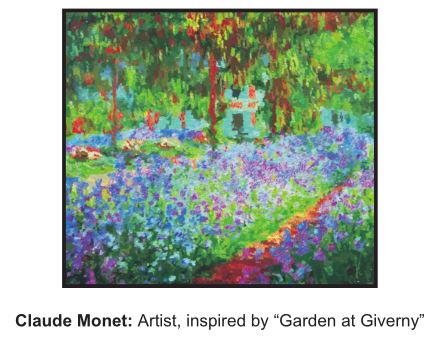
Bringing Feelings into Art: Impressionism

Claude Monet’s “Impression, Sunrise” inspired the name for the new movement: Impressionism.

In the 1870’s and 1880’s, a group of Paris-based artists began exploring art that incorporated their senses and feelings. The art movement of Impressionism sprang forth, although much to the chagrin of art critics who did not embrace the departure from traditional art styles. In fact, the name of the style in part derives from the title of a Claude Monet work, Impression, Sunrise. Impressionist artists often captured their realistic scenes of modern life by painting outdoors, which is also know as en plein air or in the open air.

Impressionist painting characteristics include:

  • Small, thin, yet visible brush strokes
  • Open composition
  • Focus on depicting light in its changing qualities
  • Common, ordinary subject matter
  • Inclusion of movement as a vital part of human perception and experience
  • Unusual visual angles

Who were the artists at the center of the Impressionist movement in France? Frederic Bazille, Gustave Caillebotte, Mary Cassatt (American born, she lived in Paris and participated in four Impressionist exhibitions), Paul Cezanne, Edgar Degas, Armand Guillaumin, Edouard Manet, Claude Monet, Berthe Morisot, Camille Pissarro, Pierre-Auguste Renoir and Alfred Sisley.Original art by an Abrakadoodle student in New Jersey

Original art by an Abrakadoodle student in New Jersey

Try Impressionism at home! Encourage your child to take a sketchpad outside. Talk to your child about what she sees. Where is the sun in the sky? Are there clouds above? How blue is the sky? What in your child’s surroundings catches her eye? Provide paint, crayons or markers, so that your child can capture the scene. Ask your child to describe her feelings about what she is viewing, because these impressions may drive her to add color or highlight an element of the picture she has in mind. Have fun with the process of using feelings and enjoying the outdoors to inspire your child’s art!