Cubism: Shaping our view

Picasso's Three Musicians courtesy of Moma 2006

The early 1900’s ushered in the new art style of Cubism, which was based upon using geometric shapes to express creative ideas and marked the beginning of the Abstract and Non-objective art styles. Artists broke apart objects, and then analyzed and re-assembled them in an abstracted form. In this way, artists showed multiple viewpoints to represent a subject.

Spanish-born artist Pablo Picasso was a co-founder of this exciting movement, having spent his early years in fine arts training during which he refined his immense talent. Picasso moved to Paris and explored different art theories, techniques and ideas. In addition to painting, Picasso was an accomplished sculptor and printmaker.

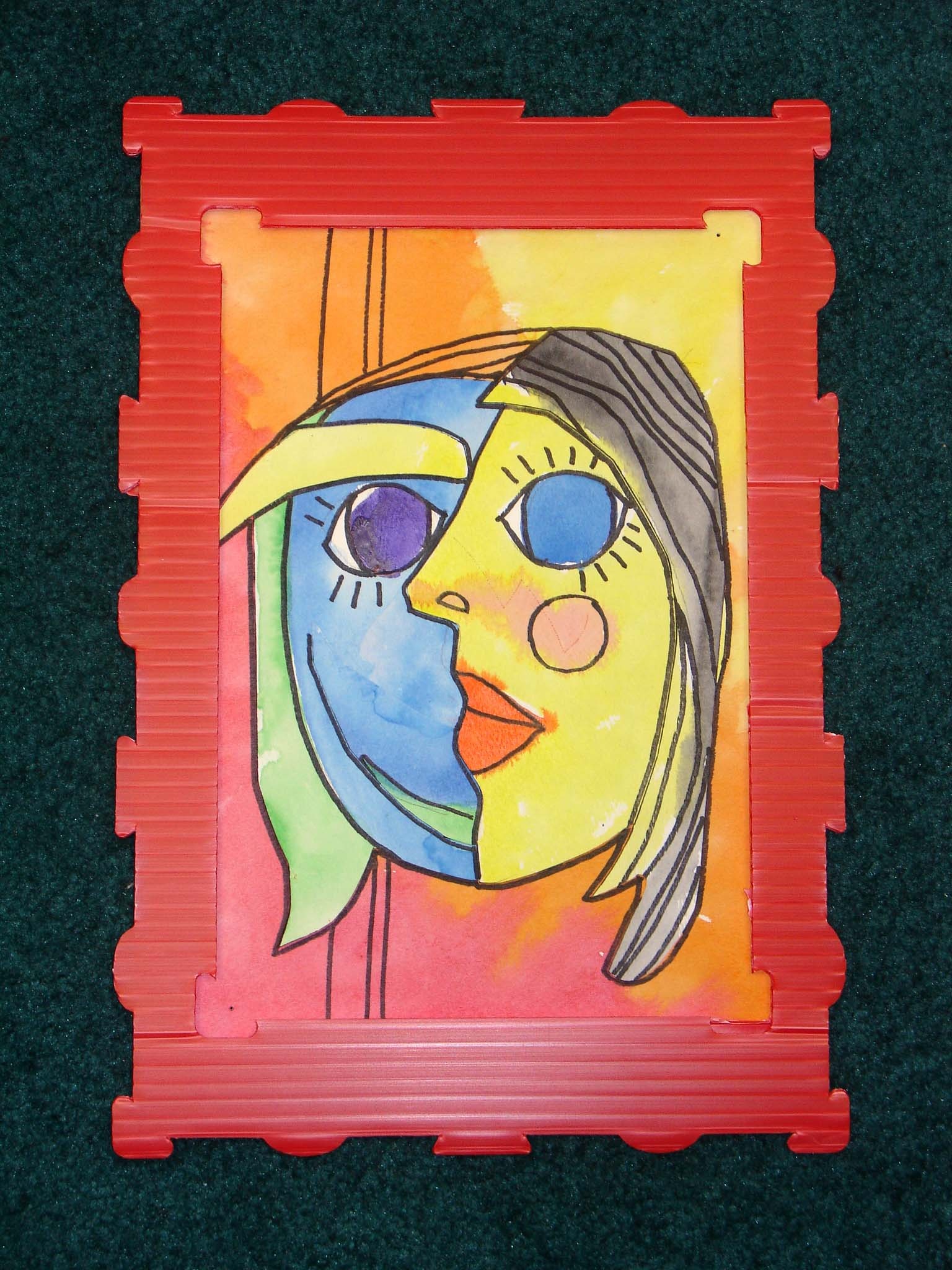
Children in Abrakadoodle art love learning to create art in Picasso’s bold style!

Students in Abrakadoodle’s art programs love to create their own art in Picasso’s bold style.

Encourage your child to create a piece of art that makes use of shapes. For young children, you may want to have a variety of shapes cut out. Older children will enjoy making and using shapes that range from basic triangles, circles and rectangles to more advanced cubes, cylinders and trapezoids. You might want to make art in collage style, exploring how shapes can be fashioned together in a way that expresses your child’s view of a subject – whether it be a representation of something from nature, planets, animals or any intriguing subject matter. Remember to honor the process of creating art and focus more on your child’s vision and ideas that contributed to his or her artful endeavor. In this way, your child’s imagination can really begin to take shape!

Realism: Replicating what is real

Manet's "The Railroad"

We’ve all heard the modern expression, “get real.” Did you know it had its roots – at least in the art world – in the 1800′s? Traveling back to the mid 1800′s, the artists of the Realist school emerged in France. They wanted to move away from the idealization of a subject, which was widespread among such art movements as Neoclassicism and Romanticism. These artists wanted to show the natural truth of their subject. Realist artists often chose subjects for their art from everyday life around them.

Edouard Manet is a well-known French painter, who was born in 1832 in Paris and was prominent in the Realism movement. He particularly enjoyed creating art based upon his observations of social life and leisure activities in 19th century Paris. His work was characterized by loose brushstrokes and minimal detailing.

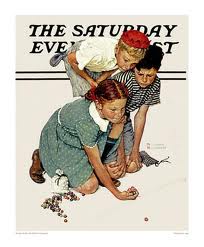
Norman Rockwell was famous for bringing the American experience to life through his art

Norman Rockwell is a beloved American illustrator and painter, who was born in the late 1800′s in New York City. Abrakadoodle students enjoy creating art in his realistic, if not idealized style, which depicted a truly American way of life. Rockwell was inspired by the works of Rembrandt and he followed his style by working in Realism while many artists of that time were focused on Abstract art. He created art that is treasured to this day and represented family life, activities such as Boy Scouts and many of his works conveyed good cheer and playfulness.

Children can really enjoy working in the style of realism because it focuses upon everyday life. Sketchbooks are particularly fun for children ages six and up. Encourage them to use their sketchbooks or paper to capture simple drawings of things they see occurring around them, such as mom brushing sister’s hair, a puppy taking a nap or a friend playing a game. By doing so, children capture the essence of realism and have fun recording everyday events. Remember to honor the process of creating art and focus more upon your child’s vision than evaluating the finished project. Promote discussion by saying, “Tell me about your artwork” or “What were you thinking about when you created this picture?” These types of quesitons can help provide insights into your child’s vision or purpose.


Fauvism: It’s all about the color

Woman with a Hat by Henri Matisse

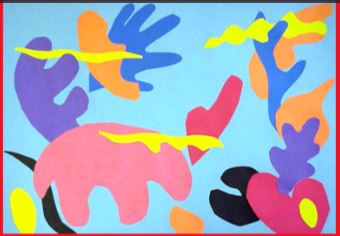
We are all drawn to color but none more so than the Fauvists of the early 1900′s, who created art that focused more on powerful colors than on the subjects of their artworks. In French, fauves translates to “wild beasts.” Many believe that fauvism grew out of the impressionism movement. The fauvists used wild brush strokes, intense colors and abstraction. Henri Matisse is a favorite artist featured in Abrakadoodle’s art program for children. His work, “Women with a Hat” (right) is said to have given rise to the Fauvism movement. Matisse simply loved art and over his life he experimented with many styles, ending his career with wonderful paper cutouts, which students in Abrakadoodle art classes love to explore. Our students create original, Matisse-inspired artworks from their own imaginations.

Colorful landscape by Andre Derain

Andre Derain was another French artist, who was a leading painter with the Fauves. Derain became friends with Matisse. He once said, “The colors were even dynamite cartridges to us.” His artwork featured bright, flat colors with spontaneous brush strokes. He often painted landscapes.

Encourage your child to create a piece of art that is very colorful. You might add to the creative adventure by saying, “If you could make your tan colored dog or cat a color, what color or colors would you choose?” Let your child’s little inner color beast out for some arty fun!

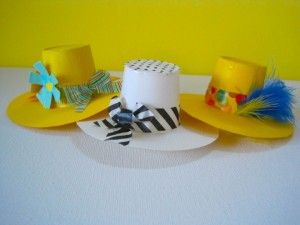
Sweet Spring Hats!

Spring is a time to get inspired with arty projects! These adorable hats are made with recycled K-Cups. Get brewing with your child for some springtime fun!

Transform your K-Cups into sweet spring hats!

To make:

  1. Clean out a K-Cup and remove filter.
  2. Paint the K-Cup with acrylic paint or use as is.
  3. Trace a circle on a piece of stiff paper or poster board
    for your rim.  (I traced a roll of masking tape.)
  4. Trace the K-Cup in the center of the circle.
  5. Cut out the larger circle.  Cut out the smaller interior
    circle by adding about 1/8 inch so that the smaller interior cut out will be
    smaller than the circle made by the K-Cup.
  6. Attach the cut out circle rim to the K-Cup using tape.
  7. Decorate your K-Cup with tape, paper, ribbon, flowers, feathers, or
    other decorations.

Thanks to Mary Rogers for her whimsical art!