Tapping into the Art of Dreams: Surrealism

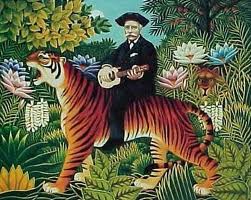
We all have wild dreams from time to time. One of mine was riding a huge dolphin out in the middle of the ocean. Surrealism is a wonderful art form that shows things we know but are depicted in ways that we wouldn’t find in everyday life – much like the landscape of a dream! French artist Henri Rousseau has a piece of art I like very much, which reminds me of my dream, because it shows a man riding a tiger – not a very likely real life scenario!

Abrakadoodle art students love learning about the fantastical art of surrealism and using their imaginations to create original artwork. Another famous artist we teach in our program, known for his extraordinarily imaginative creations, is Spanish artist Salvador Dali. Don’t you love how this ship is powered by butterflies instead of traditional sails? Check out the scale of the butterflies, too – wonderfully immense!

Challenge your child to create a piece of art based upon a dream or a fanciful idea that makes an everyday item stand out in an unusual way. Give your child’s imagination wings!

Creative Fun Making Easter Eggs Artfully Decorated with Washi Tape

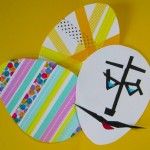
Get holiday fun rolling by creating Easter eggs artfully designed with Washi tape!

Children love the arty fun that is a big part of Easter celebrations! Here is an activity that is easy to do and can ignite your child’s imagination:

Cut out egg shapes using white paper – the ovals can be big and small!

  • Gather Washi tape from your local craft store, which is available in a wide variety of colors, patterns and designs
  • Cut strips and press them down in whatever design suits you
  • Join your child in creating eggs that will be a treat for all to enjoy!

Transform Your Used K-Cup into an Arty Pot

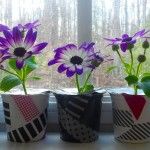
You’ve enjoyed your single-serve  coffee; now you can recycle it and watch it grow! This could make a fun, arty project to brighten your child’s window sill.

K-Cups make great decorative planters!

Here’s how:

Remove top and coffee grounds

  1. Decorate with Washi tape
  2. Fill with potting soil
  3. Plant a seed
  4. The K-Cups have a hole in the bottom for
    drainage, so place something that can catch the overflow

Abstract Art Challenges Children’s Imaginative Vision

Composition X by Kandinsky, which he produced in 1939

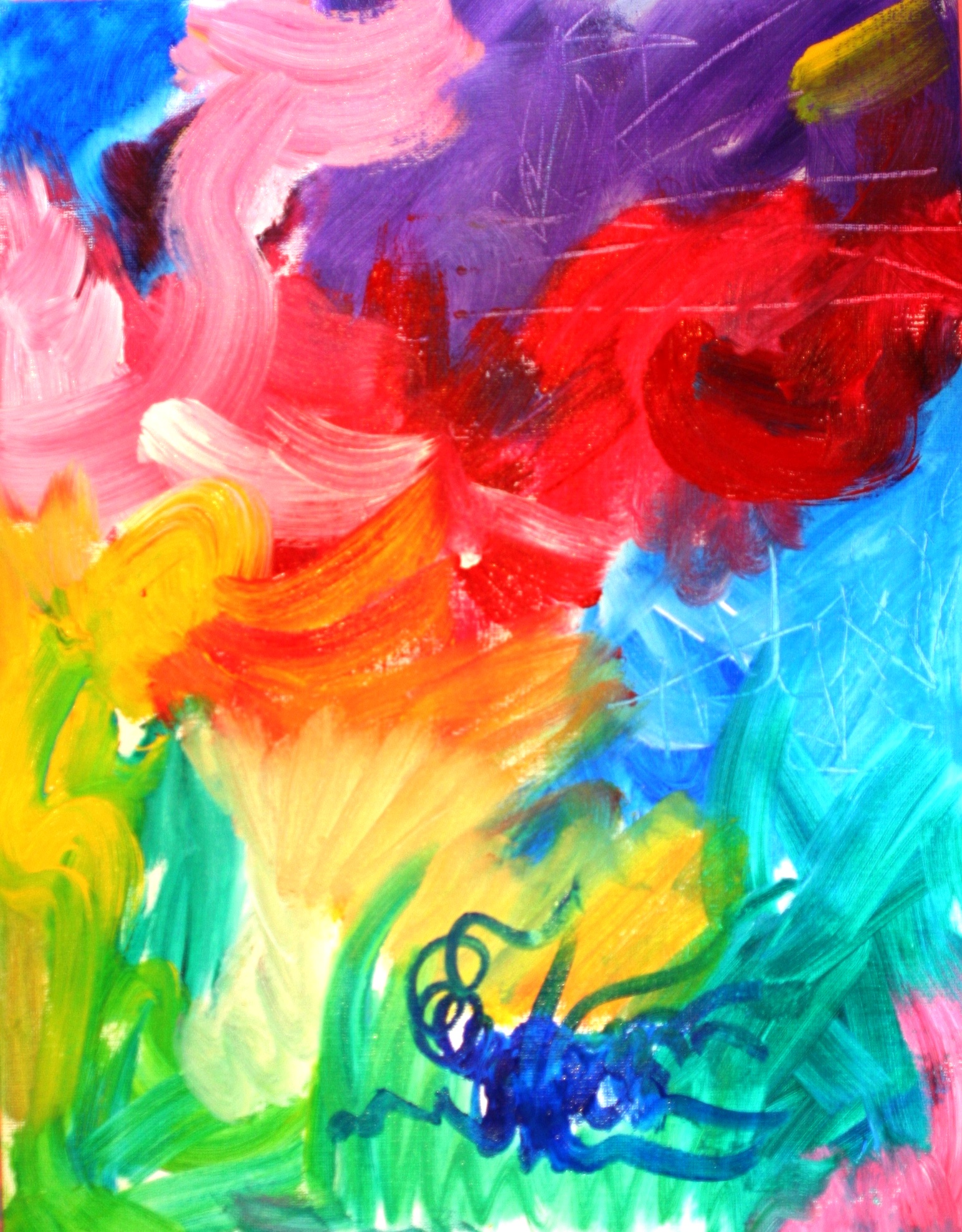
A quizzical tilt of the head, a little smile – yes, your child is looking at a piece of art that uses color, lines and shapes to show people, animals or places differently from how they appear in the real world. Abstract art is also called non-objective art, because you do not typically see specific objects but rather you are meant to feel emotions upon viewing the art.

Abrakadoodle students love exploring abstract art and the artists who produce it – from such inventive masters as Guiseppe Arcimboldo from long ago in the 1500′s to Wassily Kandinsky (right), who came to prominence in the early 1900′s.

How many dogs do you see? What types of shapes did the artist use?

Here’s an abstract art activity to try at home. Do you have a family pet, such as a dog? Any favorite animal will also work. What you’ll need is some blank paper, scissors, color or construction paper for making shapes (you can pre-cut some shapes for very young children), crayons, markers, glue, and other nice-to-have’s such as paint, stamps, magazine clippings and other embellishments. You might even consider printing a photo of your pet that can be cut and used for this abstract project. You can encourage your child to use simple shapes via sketching or gluing cut-outs in the form of collage to represent your pet or your child’s favorite animal. Next, consider colors or patterns that give your pet a new look that represents your child’s feelings or ideas. There is no right or wrong way to do this creative type of art. Let your child’s imagination take shape!


Get Creative with Washi Tape

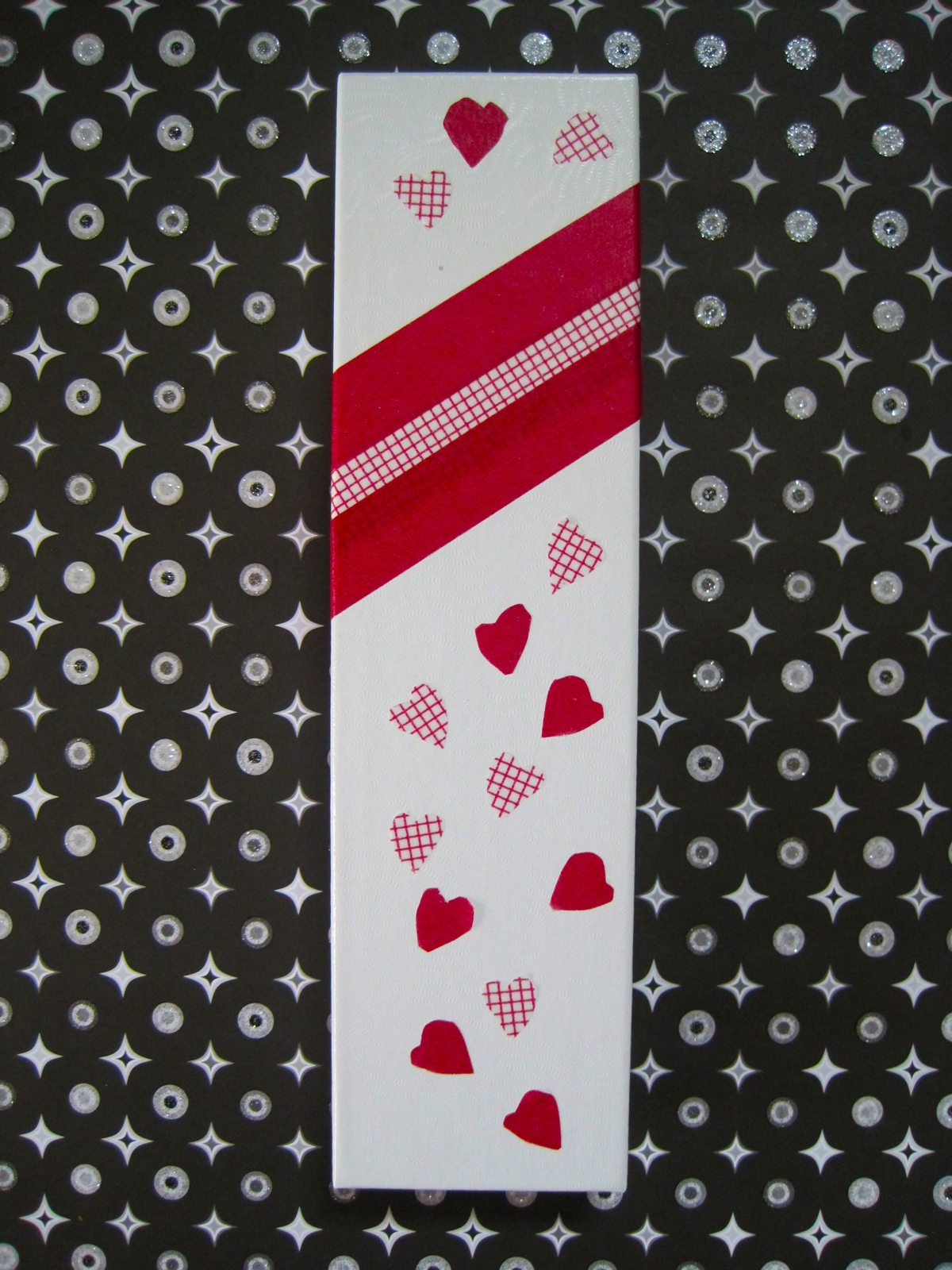
Washi tape offers yards of creative fun!

Washi tape – it’s one of the latest arty sensations and offers a fun creative outlet for all ages! This paper tape is Japanese in origin and comes in pretty colors and patterns. It’s often translucent, so you can have fun applying it to dark surfaces as well as light. Washi tape feels more like masking tape than paper, and it is pretty easy to use. You can dress up a package; a book cover; a journal page, a scrapbook and so much more! Happy taping!

Artist Focused on Color with Great Impact: A Black History Month Retrospective

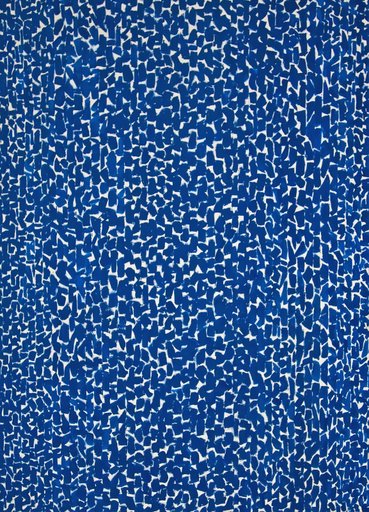
"Sky Light," created by Alma Thomas in 1973

Her artwork (“Sky Light”) graces the Obama’s private residence in the White House. She was the first student to graduate with a B.S. in Fine Arts from Howard University. She was the first African American to have a solo exhibition at the Whitney Museum, and critics raved! A teacher and community arts developer, this lady impacted lives in a positive way. She shows us that the creative journey is limitless.

Alma Thomas, photograph courtesy of the Associated Press

Alma Woodsey Thomas is a truly distinctive artist featured in Abrakadoodle’s creative art program for children. Born September 22, 1891, Alma showed her interest in the arts at a young age, making puppets and sculpture creations. She was a lifelong learner and educator and what you might call a late bloomer, evolving into an Expressionist painter.

Alma’s family moved her from Georgia to Washington, D.C. in 1906 due to the racial turmoil in Georgia, as well as the well-respected (though then segregated) public school system available in the nation’s capitol. Alma graduated from high school and then studied kindergarten education and became a teacher. Some years passed and in 1921, she entered Howard University and became the first graduate with a B.S. in Fine Arts in 1924. Alma went on to teach at the junior high level and started a community arts program that encouraged student appreciation of fine art. In 1934, Alma earned her Masters in Art Education from Columbia University, and she also studied painting for nearly a decade at American University. She traveled to art centers in Western Europe and after retiring in 1960, she dedicated herself to painting in the kitchen of her childhood home in D.C. She was 69 years young! Alma’s passion for education and her happy, colorful artwork inspire us all, and Abrakadoodle salutes her contribution to creativity and the arts!

According to a 2009 article, White House Art: Colors from a World of Black and White, from the New York Times, “Her art was accessible. Her abstraction was never really abstract; you could always see the nature in it: flowers, wind. Her paintings were modern but part of some older tradition too, as close to quilts as to Matisse. In a racially charged era, her art wasn’t political, or at least not overtly so. Instead of talking anger, she talked color: ‘Through color I have sought to concentrate on beauty and happiness, rather than on man’s inhumanity to man.’

Alma Thomas was the first African American woman to have a solor exhibition at the Whitney Museum of American Art, and that same year, her work was also shown at the Corcoran Gallery of Art.

“Creativity art is for all time and is therefore independent of time. It is of all ages, of every land, and if by this we mean the creative spirit in man which produces a picture or a statue is common to the whole civilized world, independent of age, race and nationality; the statement may stand unchallenged.” ~ Alma Thomas, 1970