Swirling, Curling, Colorful: Post-Impressionism Extends Emotional Appeal in Art

How do you follow-up on the admired art form of Impressionism and the beloved works of such Impressionists as Monet and Renoir? Post-Impressionism emerged between 1886 and 1914, as artists strove to make their own mark in the visual arts. Post-Impressionists extended Impressionism by emphasizing geometric forms, distorting form for expressive effect, and by using color in random ways. Like Impressionists, Post-Impressionist artists continued using vivid colors, thick application of paint, as well as distinctive brush strokes and the use of real-life subject matter.

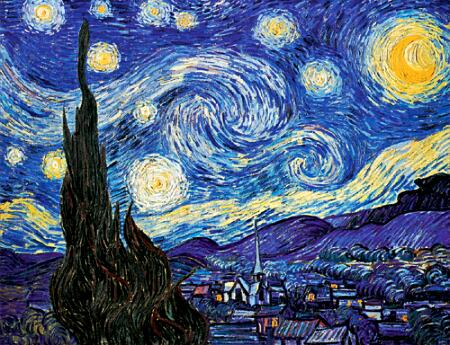
"The Starry Night" by Vincent Van Gogh

Post-Impressionist artists contributed to new ways to make art. Georges Seurat literally made his mark on this style by using tiny dots of color, which would come to be known as Pointillism. Vincent Van Gogh used extensive swirling, curling brushstrokes and vivid colors in his powerful art. Did you know that he created “The Starry Night” in June 1889 during his extended stay at a hospital? The hospital was formerly a monastery and featured beautiful grounds with fields, vineyards and olive trees that inspired Van Gogh during his hospitalization.

Kids love to learn about art and artists, and to apply this knowledge as they create original art in Abrakadoodle programs. Other well-known Post-Impressionists included Henri Rousseau, Paul Cezanne, Paul Gauguin and Henri de Toulouse-Lautrec.

Bringing Feelings into Art: Impressionism

Claude Monet’s “Impression, Sunrise” inspired the name for the new movement: Impressionism.

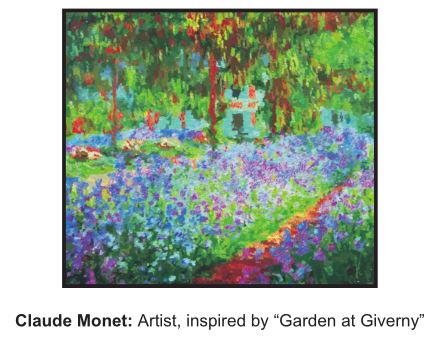
In the 1870’s and 1880’s, a group of Paris-based artists began exploring art that incorporated their senses and feelings. The art movement of Impressionism sprang forth, although much to the chagrin of art critics who did not embrace the departure from traditional art styles. In fact, the name of the style in part derives from the title of a Claude Monet work, Impression, Sunrise. Impressionist artists often captured their realistic scenes of modern life by painting outdoors, which is also know as en plein air or in the open air.

Impressionist painting characteristics include:

  • Small, thin, yet visible brush strokes
  • Open composition
  • Focus on depicting light in its changing qualities
  • Common, ordinary subject matter
  • Inclusion of movement as a vital part of human perception and experience
  • Unusual visual angles

Who were the artists at the center of the Impressionist movement in France? Frederic Bazille, Gustave Caillebotte, Mary Cassatt (American born, she lived in Paris and participated in four Impressionist exhibitions), Paul Cezanne, Edgar Degas, Armand Guillaumin, Edouard Manet, Claude Monet, Berthe Morisot, Camille Pissarro, Pierre-Auguste Renoir and Alfred Sisley.Original art by an Abrakadoodle student in New Jersey

Original art by an Abrakadoodle student in New Jersey

Try Impressionism at home! Encourage your child to take a sketchpad outside. Talk to your child about what she sees. Where is the sun in the sky? Are there clouds above? How blue is the sky? What in your child’s surroundings catches her eye? Provide paint, crayons or markers, so that your child can capture the scene. Ask your child to describe her feelings about what she is viewing, because these impressions may drive her to add color or highlight an element of the picture she has in mind. Have fun with the process of using feelings and enjoying the outdoors to inspire your child’s art!


Artists for Kids
Marvelous Matisse
(Left is one of his most famous works, “The Joy of Life”)

Known as the greatest colorist of the twentieth century, Henri Matisse was a painter and sculptor recognized internationally for his use of color, expressiveness and unique form. He was about 20 years old and recovering from appendicitis when his mother bought him art supplies to keep him busy as he recuperated. He refers to this time as discovering a kind of paradise.” Within two years, he left his legal career to pursue art. His early works were influenced by post-Impressionist Paul Cezanne, in particular. Matisse had famous friends, too, including Pablo Picasso, a fellow modern art pioneer.

What kids can learn from Matisse?

(Art for Kids)
Matisse created colorful pictures that helped show how he was feeling. He also liked to use scissors and cut out a wide variety of shapes in all sizes and would make collages with them. Matisse was inspired by nature.

There are many ways to promote creativity in children. Make sure they get outside to gain an appreciation for nature, just as Matisse did. Children can enjoy the idea of Matisse’s shape collages by experimenting with Abrakadoodle’s Matisse Artist widget. Widgetbox™ helps people express, connect, create and inform using web widgets that can be easily shared and distributed anywhere on the web. The best part is: it’s free! Visit Matisse Artist and check out other inventive applications at http://www.widgetbox.com/widget/MatisseArtist

Kids can also use colorful paper or create their own colorful designs on white paper and cut out interesting shapes in all sizes. They can use these cut-outs to make a collage or a card with interesting overlaps or with white space as they envision it. Encourage children to express their emotions using color, shapes and style. Perhaps they will find the comfort that Matisse did when he made art in his own style!