Archive for the ‘art education’ Category

New thinking about doodling


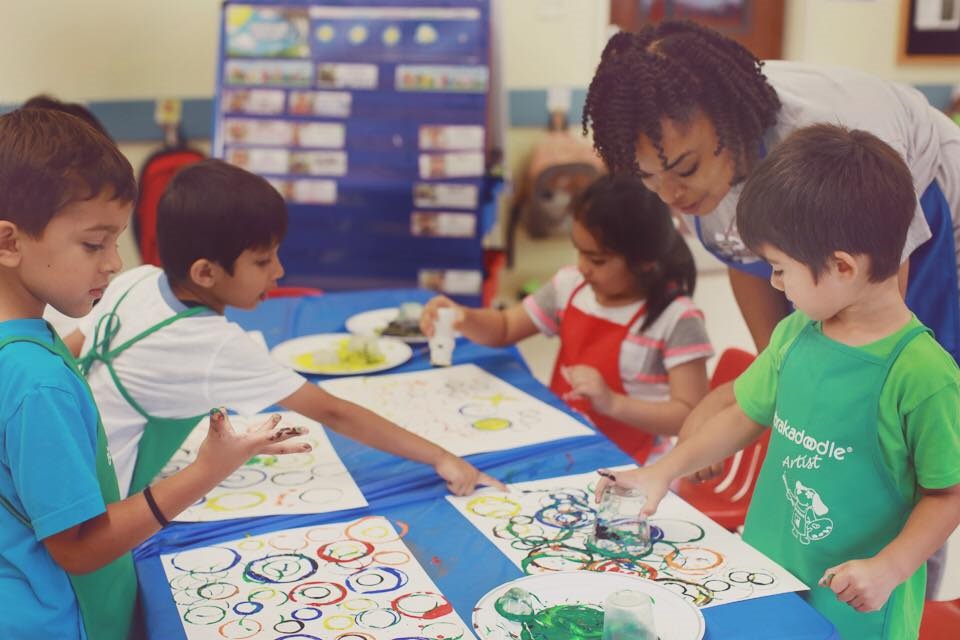
Research has long shown that art benefits children in many ways. Art education opens children’s minds and helps them become more tolerant. It also improves student’s academic performance and helps them develop the skills needed for the 21st century workplace – critical thinking, creative problem solving, effective communication, teamwork and more. New research published February 27, 2009 in the Journal of Applied Cognitive Psychology shows that the act of “doodling” may help improve memory recall. Study researcher Professor Jackie Andrade, Ph.D., of the School of Psychology, University of Plymouth said, “This study suggests that in everyday life doodling may be something we do because it helps to keep us on track with a boring task, rather than being an unnecessary distraction that we should try to resist doing.”

Promote creative doodling at home. Encourage your children not only to draw but to be inspired to stretch their imaginations and take their minds on a mini vacation. Take a moment from the busy day to be playful with art activities. Instead of a coloring book, give your child a blank sketch pad. Suggest that your child doodle a special creature, a new spaceship, a fanciful friend, or playful word art. Have some fun by offering themes or ideas that will spark your child’s creativity. Abrakadoodle remarkable art offers some online creativity games for kids – see http://www.abrakadoodle.com/kidsgamelist.html.

No Comments »

Creative Children’s Art Welcomes President Obama


Art is a wonderful tool for children’s self-expression, and art students at participating Abrakadoodle locations nationwide shared their patriotism and visions for America as part of a colorful welcome for President Barack Obama.
Some students learned about the art of Jasper Johns as an inspiration for their art. They learned about Pop Art, encaustic painting and the use of texture. Children tried out smaller, quicker brush strokes in the style of Jasper Johns as they created American flags.
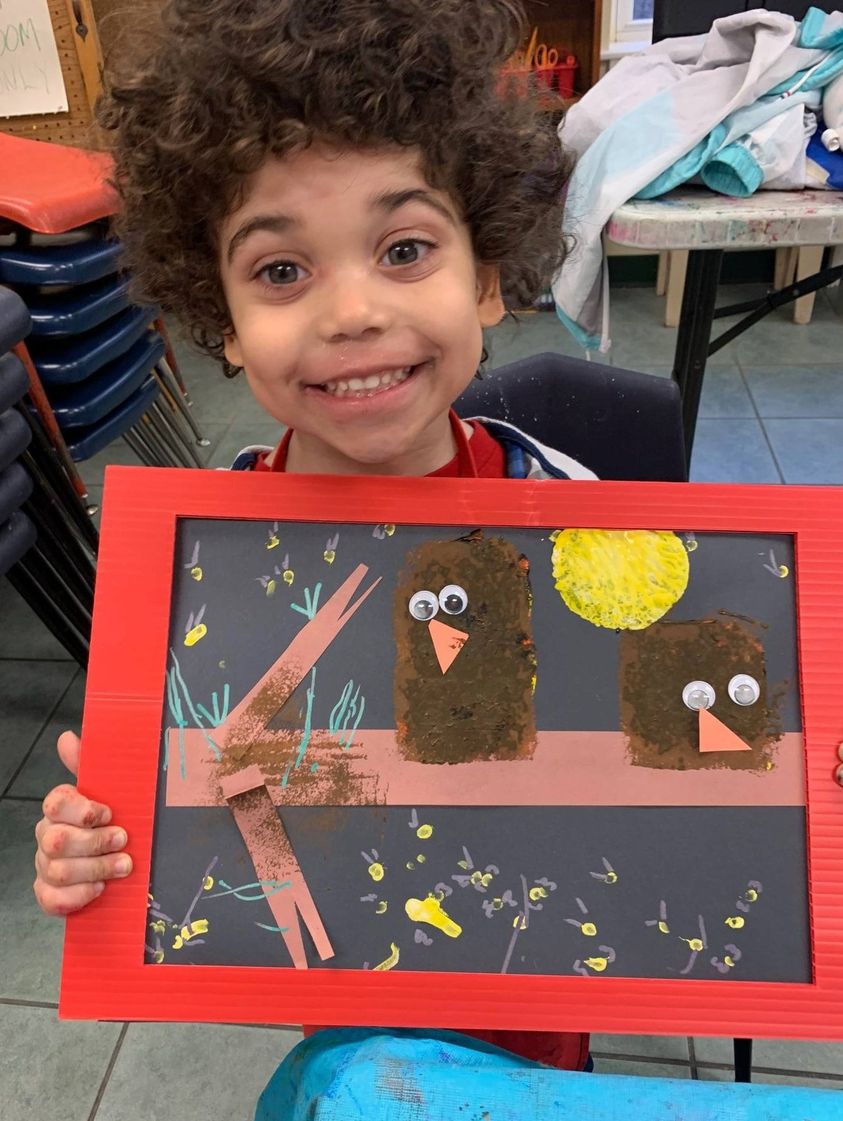
Other students learned about the life and words of Martin Luther King, Jr. and called upon his famous “I Have a Dream” speech to draw inspiration to bring their own dreams for the future into a work of art using words, images and shapes. Some children created Presidential Seals using model magic, while others created mobiles with inspirational phrases. One student literally made Presidential “seals” as shown left.
Children also created poster art in the collage style of contemporary artist Shepard Fairey, whose portrait of Barack Obama will be displayed at the National Portrait Gallery in Washington, D.C.
No Comments »

Art and History Prove to be a Powerful Combination

Art education has a special place at the Barrier Islands Center, an historic site on Virginia’s Eastern Shore. Abrakadoodle offers special workshops, after school classes, art enrichment programs and summer camps for children. In some cases, Abrakadoodle customizes its visual arts lessons that teach children to use their imaginations as they render creative works that depict the islands’ early inhabitants, seascapes, as well as its unique vegetation, coastal birds and fish.

Abrakadoodle art students at the Barrier Islands Center participate in an Art Rocks workshop. Their art works are based upon the style of Shepard Fairey, the contemporary artist whose portrait of Barack Obama will soon grace the National Gallery Art. These creations were sent to the White House to welcome President Obama.

“Because the Barrier Islands Center is located in one of Virginia’s most impoverished communities, we are particularly grateful for the community participation of programs like Abrakadoodle,” stated Laura Vaughan, Executive Director of Barrier Islands Center. “Monika and Abrakadoodle not only provide valuable educational programming, but they also help bring dollars and boost interest and participation that are so important right now as we face tough economic times.”

For nearly four years, Abrakadoodle has been partnering with the Barrier Islands Center (http://www.barrierislandcenter.com/events.html) to creatively engage children, as well as to help raise funds to help further the center’s mission.

No Comments »

Artists for Kids: Charlotte Derain

Art education is so important in today’s world. Creativity is an important element of children’s education. It not only helps students master traditional subjects like English, science, and math, but also brings cultural awareness. Charlotte Derain was born in Paris in 1949. She is a painter, designer, graphic designer and illustrator. Her Martinican origin was a source of creative inspiration while she found her own style. She devotes her career searching for her African roots. Derain brings art for kids by inviting them to reflect on their roots while being aware of other cultures.

What Kids Can Learn From Derain

(Art for Kids)


Charlotte Derain is known for her African figures. The figures are simple, but show movement. Children learn about stick figures and how to paint them in different poses. Also, they can practice painting clothes on the figures with swatches of paint. Charlotte brings art for kids with simple shapes.

Art education is about diversity. Derain’s artwork tells stories with her pictures. Instead of writing she paints life in Africa. Children can be inspired by her creativity to create a story representing their roots. Derain brings art to kids by introducing cultural art to their curriculum.
Charlotte Derain: Painter, inspired by “Woman wiht Basket”
No Comments »

Art for Kids

Stress-Busting Gets Creative

Art education can help children cope with worries. Children under stress tend to bottle up their feelings, creating emotional and physical effects. With negative news dominating our newspapers and airwaves – from a struggling economy and war to issues closer to home with worried parents, less disposable income and school stress — children need to find healthy ways to manage. Art is one of the best ways you can help your children develop skills to express themselves and liberate their feelings to help maintain healthy emotional well-being.

The key in reducing or eliminating unhealthful stress is to provide children with the tools and attention to deal with stress and by giving them a healthy outlet that sets them up with coping skills for life.

Artful calming

Art for kids should be all about originality and creativity. You can create a space at home that promotes imaginative play:

* Set up a creativity center that your children can access, which contains lots of paper, crayons, markers, nontoxic paints and brushes, modeling compounds (like Crayola Model Magic®) and more;
* You can spiff up your creativity center by encouraging your children to add recycled materials from around the house (paper towel and toilet paper tubes; bows, ribbon, bottle caps, postcards, printer paper and more;
* Identify a place where your children can create art, such as your kitchen or a coffee table. Set up the rules, such as working on plastic or newspaper;
Instead of plopping down in front of the TV or a video game, encourage your children to grab their creativity tools and make something new;
* Create meaningful patterns, such as sitting with your children before they start their art, and teach them a relaxation technique. Tell them to shut their eyes, take a deep breath while they count to five and then slowly exhale while counting to five. Play with the idea, such as “in through the nose and out through the mouth” and “in through the mouth and out through the nose;”
* Never ever judge your children’s artwork. You want to empower them to use art to express their ideas, thoughts and feelings.

Above all, children need to know that they are loved and supported. Give hugs and model grace, calm and problem-solving. Sometimes children need just 15 minutes of your undivided attention. They need to turn off the TV and sources of distraction and learn to turn within to tap their own imaginations where a world of creative adventure awaits.

Art classes are another wonderful way to promote stress-busting, while fostering imaginative learning and developing new visual arts skills, technique and vocabulary. Learn more about Abrakadoodle remarkable art classes, in-school field trips, workshops, camps and parties: http://www.abrakadoodle.com/programs.htm.

No Comments »

Artists for Kids: Jasper Johns

Teachers of art education will be interested in Jasper Johns. His most famous artwork, Flag, is a good example of citizenship, creativity and art for kids. Johns was born in Georgia, grew up in South Carolina, and he moved to New York City where he studied briefly at the Parsons School of Design. In NY he met Robert Rauschenberg (visual artist), Merce Cunningham (choreographer) and John Cage (composer). Working together they explored the contemporary art scene.

Initially Johns supported himself by working in a bookstore and designing window displays for prestigious stores. While visiting Rauschenberg’s studio, his creativity was discovered by Leo Castelli, who promoted his artwork on his gallery. Jasper Johns is often called the “Father of Pop Art” because he represents subjects that are popular in our culture.

What Kids Can Learn From Johns

(Art for Kids)


Art education is also a tool to educate children about citizenship. Johns’ most famous artwork is the painting Flag, which he made after having a dream of the American flag. Through his work children can learn about the American flag’s colors and the meaning of the stripes and the stars.

Jasper Johns brings art for kids by introducing Pop Art to their curriculum. Pop Art uses images from the popular mass culture. Children can be inspired by comic books, advertising, TV and everyday cultural objects. Jasper Johns likes to repeat the same object over and over and color them with different colors.

Learn more about Jasper Johns on the web at:

http://www.nga.gov/cgi-bin/pbio?65280

2 Comments »

Artists For Kids: Alma Thomas

After working in art education for several years, Alma Thomas enrolled at Howard University in Washington, DC to study costume design. She became the first African American woman to hold a fine arts degree. Following a long career as a teacher, she retired to focus on her own creativity and art.

Thomas’s work was included in the important show Contemporary Black Artists in America, held in 1971 at the Whitney Museum in New York. She was the first African American woman to have a solo art exhibition at the same museum. Three years after she died, a retrospective exhibition was held at the Smithsonian Institution’s National Museum of American Art. Besides a distinguished career teaching art for kids, her work can be found in many major museums.

What Kids Can Learn From Thomas
(Art for Kids)

Alma Thomas loved children and she had an important role in art education. But, she also loved to learn. She was interested in space programs and she often painted from satellite photographs. She often looked at her garden and watched its changes. She could hear the wind playing music in the trees, and she loved to watch the grass color change after the rain. She enjoyed all these changes that inspired her artwork at the same time that she was learning about nature. Her creativity was inspired by science and nature.

Thomas loved to smile and she liked to paint with bright colors. Primary colors were often used in her artwork to make her paintings look happy and vibrant. Thomas brings art for kids by inspiring them to look closely at nature and to use patterns and colors to create art that makes them happy. Can you see the flowers in your neighborhood singing and smiling on a sunny day?

Alma Thomas: Painter, inspired by “Iris, Tulips, Jonquils and Crocuses”

Learn more about Alma Thomas on the web at:

http://www.georgiaencyclopedia.org/nge/Article.jsp?id=h-1040

No Comments »

Artists for Kids: LeRoy Neiman

Contemporary artists should be part of any art education program. LeRoy Neiman was born in St. Paul, Minnesota, and studied at the Art Institute of Chicago, De Paul University, and at the University of Illinois. Neiman started his career as an illustrator. He became famous largely because of his creativity illustrating sports, ranging from basketball, boxing, billiards, and hockey to gymnastics, swimming, and cycling. But, he also portrays people, animals and events. Neiman brings art to kids by inspiring creativity, while they learn to paint their favorite sport or favorite animal.

Neiman was also a professor at the Art Institute of Chicago’s school for several years. He was the official artist at three of the Olympic Games for ABC Television. His images appear in the form of etchings, lithographs, silkscreen prints, sculptures as well as paintings.You can see his works at the Smithsonian Institution in Washington, D.C., and the Hermitage in St. Petersburg

What Kids Can Learn From Neiman
(Art for Kids)

Teachers of art education will be interested in this artist. Neiman likes to use primary colors in his artwork. His artwork is a great opportunity for children to learn about color theory. Children can learn about the three primary colors: red; yellow; and blue; and their capability for creating new colors.


Neiman likes to use fast-moving strokes. His artwork is dynamic and his strokes give the impression of fast-moving action. Children can learn to paint in various directions while they create their favorite animal. Art for kids promotes opportunities for freedom and self-expression.

LeRoy Neiman: Painter, inspired by “Portrait of the Lion”

Learn more about LeRoy Neiman on the web at:

www.leroyneiman.com

1 Comment »

Artists for Kids: John M. Barber

Exposure to art, creativity and art education can have an important impact in a child’s life. John M. Barber discovered his destiny at the age of seven while visiting North Carolina’s Atlantic shore and watching an artist creating a lighthouse and the vast sea beyond. Years later, he studied art in Virginia at Virginia Commonwealth University. There he was introduced to the nearby Chesapeake Bay, where he fell in love with the sea and the story of the Chesapeake and its people.

Barber’s work is a great reference for any art education teacher. He painted more than 500 pieces of art illustrating the bay’s every aspect. While he also painted other subjects, the effect of light on his scenes always captivated him. Inspired by Barber’s creations, children can learn how to create light on their own artwork. Often, organizations and individuals commission Barber scenes imagined by them. John Barber creates the scenes, but he always imprints the pictures with his creativity and unique style.
What Kids Can Learn From Barber
(Art for Kids)

Barber’s work is about environment and all his paintings have a beautiful glow of light in them. Children can learn about a technique called bull’s eye painting from the art of John Barber. In bull’s eye painting the main subject is painted with a light color while darker colors are painted around the outside. This effect directs the viewer’s attention to the main object of the painting.

John M. Barber: Painter, inspired by “A Winter’s Evening on the Hill”

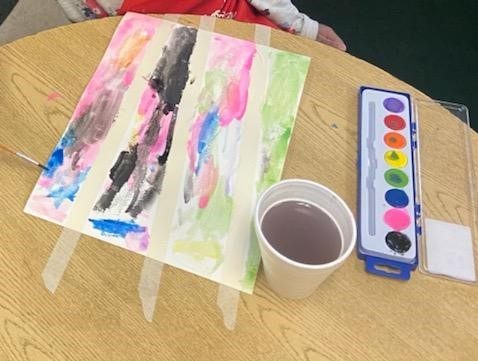
Art for kids needs to be fun and creative. The wax resist method is an easy technique that challenges the children while they learn to create light on a painting. Children can draw a seascape using a white or light color crayon. After wetting the paper with clear water they can paint the picture with watercolor. Starting with yellow at the center of the paper they can add darker colors in a circular fashion creating light on the painting while revealing their drawing.

Learn more about Barber on the web at:
http://www.johnbarberart.com/

2 Comments »

Art for Kids

Use Guided Imagery to Spark Your Child’s Imagination

Guided imagery is an educational technique that is used in quality art education programs to help children tap their imaginations. You can make art for kids a magical experience that can transport your child on a journey of creative discovery. Your child does not have to visit an unusual location in order to illustrate his or her vision of it. An adult can lead this imagination-boosting activity. First, you’ll want to set up an art activity area. Don’t forget a protective table covering, depending upon what kinds of art supplies you plan to make available to your child. Have different sizes of white paper with lots of paints, markers and/or crayons and tools to draw and create. Guided imagery helps children tap their mind’s eye. Ask your child to close his/her eyes. Speak slowly with inflection as you read the passage below, and then see what blooms from your child’s imagination.

A Rainforest Adventure
Let’s visit the rainforest. Close your eyes. Grab your pretend camera and let’s climb aboard a magic carpet and fly over our neighborhood and out of town and though our country until you reach a tropical rainforest far, far away. Hold on tight as you swoop down through the dense grove of trees. You settle down upon the soft earth below. Keep your eyes closed and let your senses explore your environment. Smell the rich scent of tropic flowers and moist earth. Do you feel the sticky, warm air? Hear the buzzing of insects, whirring of small birds flying nearby, as well as the rustling of animals in the high tree canopies. A snake is lazily coiling around a nearby tree trunk. Is that a monkey overhead? Let your imagination capture what you see. Snap a few pictures of the amazing scenery. Perhaps it’s a colorful flower, a vast tree canopy, a tropical bird, a big bug, a slithering snake, or a long-tailed monkey swinging from the high branches. One thing is for sure: these are not sights you see at home!
Now, open your eyes and draw some of the pictures taken by your inner vision. Add color and detail that brings the images to life. This is art for kids at its best.

No Comments »

WP Login