Charter School Creates Art Studio to House Abrakadoodle Art Program

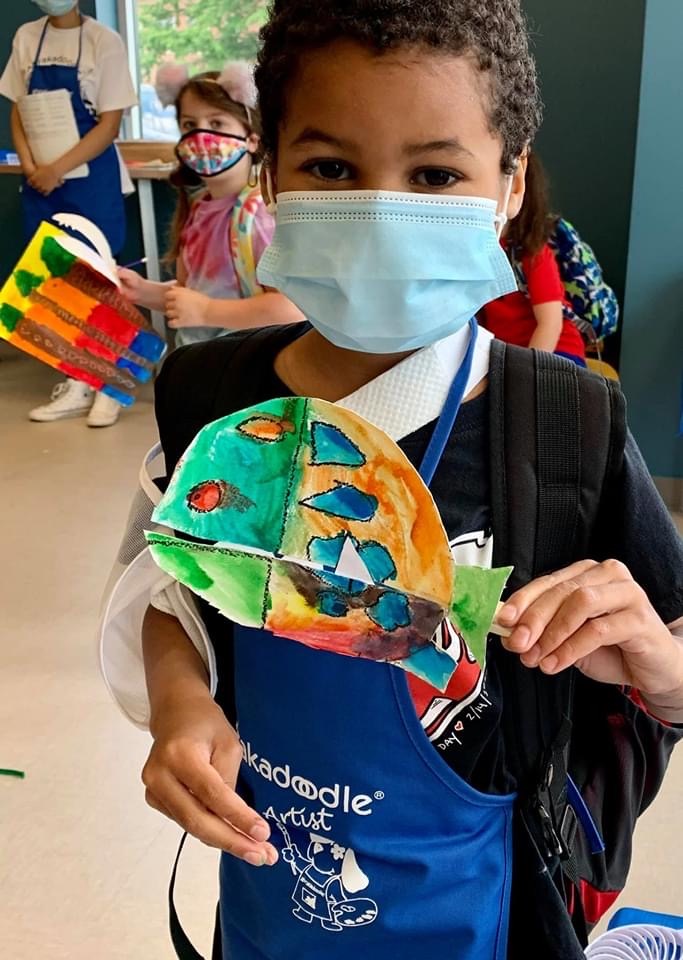
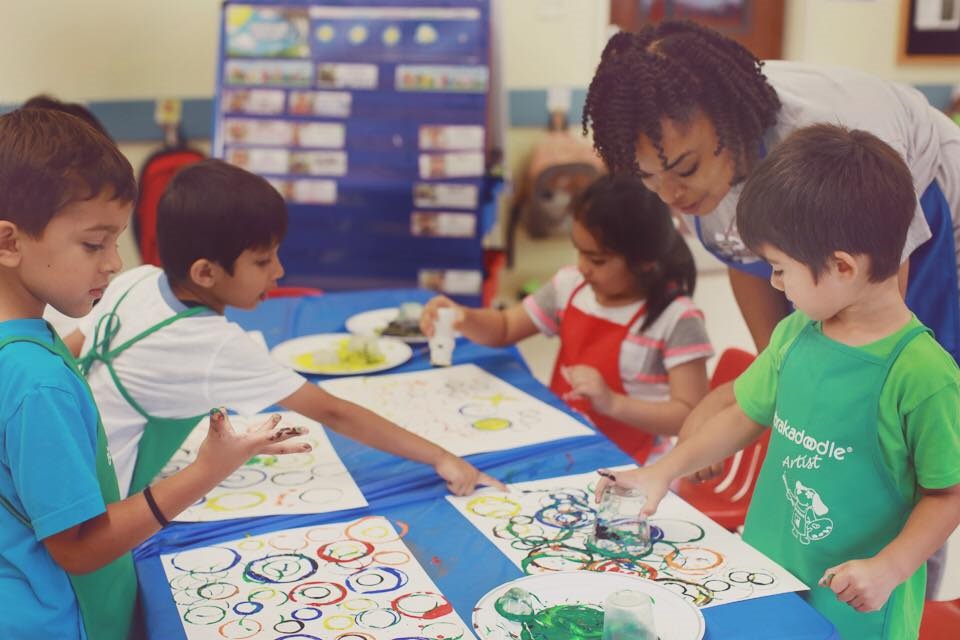
Abrakadoodle artists featured at the new art studio opening

Art is impactful and worthy of investment. This was a message that resonated during a ribbon-cutting ceremony at the Allen Academy in Detroit, which on Monday, January 14th formally opened a spacious, newly renovated space that will be devoted to Abrakadoodle’s art program. According to Dawna Kelly, Director of Abrakadoodle-Wayne County, “We are honored by the Allen Academy’s commitment to the visual arts. They have been one of our customers (more like family members) for the past five years, and we have been providing our art program for students through grade six in a very small space with no water supply.” The new art studio features 24 workstations, two sinks and a space for a kiln to be purchased later this year.

During the formal dedication ceremony, Allen Academy school leader Monique Woodland Phillips was joined by several board members to include Barbara Barrett, Regional Vice President of the charter management group. Isaiah Pettway provided remarks regarding the importance of the fine arts, and Trena Braswell offered comments recognizing the student artwork on display at the event.

The Allen Academy is situated in a former Catholic school, and the art studio space was the former rectory. A priest who lived and worked at the rectory returned to share a heartfelt message about the importance of art education for our society. He talked about a recent visit to a nursing home in which seniors with various levels of impairment would still tap their feet when they heard music or smile at the sight of children’s artwork.

Animals in Art: Kids Love Them

The Cave of Altamira in Spain is famous for its Paleolithic cave paintings.

Kids love animals, and so it only stands to reason that they also appreciate viewing and creating their own animals in art. Throughout history, artists have always created drawings, paintings and sculptures of animals. Cave art reveals ancient paintings that date back tens of thousands of years in which animals are portrayed. Ancient Egyptian artists often depicted gods with the heads of animals. Tribal art generally features a combination of animal and human characteristics that seem to symbolize man’s bond with his natural environment. Mythical beasts of the Middle Ages decorated medieval manuscripts with creatures that sometimes took on secret symbolic associations. Art of the 17th Century featured hunting scenes with dramatic life and death struggles, while 18th Century artists celebrated the natural beauty and majesty of animals in their natural habitats. Victorian artists of the 19th Century painted sentimental pieces of their domestic pets and livestock, while artists in the 20th Century explored a wide range of animal genres and invented some, as well. As we get underway with the 21st Century, we see wonderfully diverse animal artisans.

"Northern Monarch" by Solberg is a great example of his breathtaking watercolor originals.

Abrakadoodle features a number of talented contemporary and classic artists who inspire students with their animal creations. Mort Solberg is a wildlife painter and an Abrakadoodle Artist of Distinction. Children love to create art in his style that  incorporates the use of a large paint brush to create art that combines realism with abstract images. Mort brings his love of nature and the outdoors into his award-winning art, and he wants to foster that appreciation in children.

"Zara the Zebra" by Sophie Harding.

Contemporary artist Sophie Harding enchants kids everywhere with her adorable animal creations fashioned in a Naïve Art style that feature simple shapes and vivid colors. Born in England, Sophie received a diploma in General Art and Design, followed by a bachelor’s degree in Fashion and Textiles at Central St. Martins. Her training has motivated her to use many different types of artistic media in her work. In addition to Naïve Art and fine art prints, Sophie is a successful illustrator of children’s books and magazines, greeting cards, gift wrap, calendars, tableware and textile designs.

Robin Anne Cooper created canvas collage originals featuring Abrakadoodle’s arty dog Splat.

Upon discovering the unique works of Robin Anne Cooper of South Carolina just a couple of years ago, Abrakadoodle commissioned her work for holiday gifts. Robin created 52 unique canvas collages featuring Abrakadoodle’s arty dog mascot Splat. Robin uses a unique style of canvas collage in which she paints, cuts up and then produces a new piece featuring such whimsical subjects as cats and dogs. Robin Anne Cooper believes in creating original, affordable art. “Kids so often associate art with well known artists of the past like Picasso and Rembrandt,” commented Abrakadoodle’s co-founder and CEO Mary Rogers, adding, “Abrakadoodle features these classic artists, as well as some of today’s working artists like Robin Anne Cooper, who create amazing artwork that inspires kids to be creative and to see how real people incorporate art into their lives and their work.”

Holiday Decorating with Your Child’s Art

Holiday art by Gemma - age 10

Kids love to make art, and the holiday season is a great time to encourage your children to take part in arty expression! Find a workspace for your child and provide lots of fun supplies like paper, markers, colored pencils, paint and other age-appropriate creative embellishments, such as glitter, stamp sets, pom-pom’s and more. To set an imaginative holiday tone, you might wish to play some seasonal favorite music or read a favorite holiday story to kick off the arty adventure.

Original art by Alicia – age 11

Your child’s art can be used in so many festive ways. Perhaps you might like to use a piece of art as a holiday greeting card template. Fridge art is a standard, or you can go high-tech by scanning the art and using it as a screensaver or a profile picture online. If you have the space, a corkboard set up may offer you a wonderful space to neatly arrange art throughout the year. Art makes great gifts, too! Encourage your kids to sign and date their work. We love kids art, so please feel free to share it with us on our Facebook page!

Swirling, Curling, Colorful: Post-Impressionism Extends Emotional Appeal in Art

How do you follow-up on the admired art form of Impressionism and the beloved works of such Impressionists as Monet and Renoir? Post-Impressionism emerged between 1886 and 1914, as artists strove to make their own mark in the visual arts. Post-Impressionists extended Impressionism by emphasizing geometric forms, distorting form for expressive effect, and by using color in random ways. Like Impressionists, Post-Impressionist artists continued using vivid colors, thick application of paint, as well as distinctive brush strokes and the use of real-life subject matter.

"The Starry Night" by Vincent Van Gogh

Post-Impressionist artists contributed to new ways to make art. Georges Seurat literally made his mark on this style by using tiny dots of color, which would come to be known as Pointillism. Vincent Van Gogh used extensive swirling, curling brushstrokes and vivid colors in his powerful art. Did you know that he created “The Starry Night” in June 1889 during his extended stay at a hospital? The hospital was formerly a monastery and featured beautiful grounds with fields, vineyards and olive trees that inspired Van Gogh during his hospitalization.

Kids love to learn about art and artists, and to apply this knowledge as they create original art in Abrakadoodle programs. Other well-known Post-Impressionists included Henri Rousseau, Paul Cezanne, Paul Gauguin and Henri de Toulouse-Lautrec.

Celebrating Creativity in Afterschool Programs

Today Abrakadoodle joins millions in celebrating Lights On Afterschool, a campaign of the Afterschool Alliance, which recognizes the importance of providing safe, strong afterschool options for children nationwide. In a recent interview on Education Nation, former Secretary of State Condoleeza Rice said “Not just safe but learning” when speaking about children’s experiences in afterschool programs. We applaud this thinking and the notion of providing children with brain-boosting opportunities that extend classroom learning. Abrakadoodle’s after school programs combine strong arts education with increasingly valuable creativity development, which engages children in hands on learning that emphasizes problem solving, originality and imaginative
expression.

Gains are beyond measure when children develop a sense of confidence and craftsmanship in the process of creating art. Art is such a powerful communication tool, and children in our program learn to appreciate the unique voice that each of them brings to his or her own creative endeavor. Consider enrolling your child in art afterschool to inspire your child’s imaginative skill building!


Expressionism: Sharing Your Emotions

Art inspired by Paul Klee's self-portrait, "Senecio"

The early 20th Century brought the world an array of experimentation in the visual arts, which included Expressionism. This art form had its beginnings in Germany, as artists were exploring new techniques that expanded beyond the Impressionism movement. “Der Blaue Retier” was a second group of expressionists, who used exaggerated imagery and lines, darker colors, wild brush strokes and depicted
emotion.

Paul Klee is an artist featured in Abrakadoodle’s art program for children, and he was a notable Expressionist. Klee was born in Switzerland and played violin. Music was an important part of his visual arts creations. He later moved to Germany, where he joined with artist friend Wassily Kandinsky to teach expressionist technique to art students. Abrakadoodle art students enjoy creating art in Klee’s style using simple lines and shapes with bold color.

Art inspired by Kandinsky’s “Concentric Circles”

Wassily Kandinsky is also an artist featured in Abrakadoodle’s art program, and he, too, was an important artist in the Expressionist movement. Born in Russia, Kandinsky like Klee also moved to Germany to explore his passion for art. Children in Abrakadoodle’s art program love to create art in Kandinsky’s fun style.

Encourage your child to create a piece of art that expresses emotion. The expressionist style makes use of simple shapes, lines and bold color. For younger children, you can encourage them to work with one or two simple shapes of different sizes and thickness. Start with larger shapes and encourage your child to create shapes within shapes. Play with color and suggest your child to select colors that make him/her happy! Older children may wish to experiment with abstract expressionism by creating an image, such as the head shown above, that connects shapes to make an interesting image. For instance, a circle can be bisected and additional shapes can be added and emphasized with color. Art is such a wonderful way for children to express themselves!

Art Helps Kids Access the Sun, Moon, Stars

Original art by Nia, age 9 of Michigan

We all want to help our children reach for the stars and shoot for the moon! Art is such a wonderful way for kids to express themselves, while developing such important skills as creativity and problem-solving. Art – whether in creation or appreciation – entails learning to see, interpret and understand. Children can translate their internal vision or depict images based upon external sources of inspiration, both of which provide young artists with material to draw upon and feed into their art practice.

Original art by Shantrice, age 13 of Michigan who write of her art, “Darkness falls; light revolves”

Explore your child’s unique view! Provide your child with some basic supplies, such as blank paper, pencils, markers and crayons. Strike up a conversation about the stars, moon, planets, as well as our sun and sky. Connect with your child’s natural enthusiasm and clever ideas by encouraging him/her to create art that captures these unique imaginings.

Fauvism: It’s all about the color

Woman with a Hat by Henri Matisse

We are all drawn to color but none more so than the Fauvists of the early 1900′s, who created art that focused more on powerful colors than on the subjects of their artworks. In French, fauves translates to “wild beasts.” Many believe that fauvism grew out of the impressionism movement. The fauvists used wild brush strokes, intense colors and abstraction. Henri Matisse is a favorite artist featured in Abrakadoodle’s art program for children. His work, “Women with a Hat” (right) is said to have given rise to the Fauvism movement. Matisse simply loved art and over his life he experimented with many styles, ending his career with wonderful paper cutouts, which students in Abrakadoodle art classes love to explore. Our students create original, Matisse-inspired artworks from their own imaginations.

Colorful landscape by Andre Derain

Andre Derain was another French artist, who was a leading painter with the Fauves. Derain became friends with Matisse. He once said, “The colors were even dynamite cartridges to us.” His artwork featured bright, flat colors with spontaneous brush strokes. He often painted landscapes.

Encourage your child to create a piece of art that is very colorful. You might add to the creative adventure by saying, “If you could make your tan colored dog or cat a color, what color or colors would you choose?” Let your child’s little inner color beast out for some arty fun!

A FUN Way to Expand Your Child’s World Vision

Kids love to learn new ways to create art, inspired by cultural traditions, artists and art forms from the far reaches of the planet we share! That alone might serve as rationale for signing up for an arts program that brings the world into your child’s grasp. You can expand your child’s world vision in a FUN way, while providing tangible benefits!

Haida Mask

#1 – Multicultural art education contributes to an understanding of the social and cultural landscape that all individuals inhabit. Children learn about world cultures in the most fun way – hands on – as they discover artists and explore art forms and styles from countries near and far. They discover an historical perspective through art with such lessons as creating Haida Masks. Art connects children no matter what race, culture, education or socio-economic status.

Story Teller Dolls

#2 – By developing a sense of self through artistic creations, students take a step toward understanding and accepting differences in others.

#3 – Multicultural arts inspire children’s imaginations. The unique nature of art representative of world cultures is stimulating to children. When they are taking part in classes that encourage them to take new concepts and use their own imaginations to apply them, they engage in self-expression, problem-solving and critical thinking skills. Children learn how to take ideas and innovate!

#4 – Confidence and self-esteem soars! Providing children with access to the arts enriches their lives by empowering them with a healthy means for communicating feelings and ideas; broadening how they see the world, as well as developing new skills, vocabulary and history unique to the visual arts. Multicultural art builds confidence in kids!

#5 – Said simply, multicultural art is fun!

Portugese Tile

In Abrakadoodle’s multicultural programs, students discover such world renowned artists as Fernando Botero of Colombia, Xu Bin of China, Esther Mahlangu of South Africa and Frida Kahlo of Mexico, to name just several.

Beyond the traditional art forms of painting, drawing, sculpture and collage, children in Abrakadoodle classes also explore such multicultural art forms as Polish paper-cutting, Portugese tiles, traditional Native American dolls, Malaysian kite crafting, Japanese kimonos, fabric art from Nigeria and many more. These imaginative, artful experiences can give your child an inspiring and delightful world view!

Artful Storytelling

I was recently so flattered when our 7-year old goddaughter Ainsley visited and before leaving, drew herself into our family tree ~ carefully placing herself under our daughter Krissa. I was touched. She also came to love our two black pugs, Duke and Jester. She loved helping me to feed them and to take them on walks. She carefully drew two big hearts, colored them, cut them out, and then she asked if she could put them down toward the bottom of our refrigerator so that our pugs could enjoy them! Naturally, I agreed! I loved how Ainsley believed that our dogs could appreciate her artwork. Why not?! Ainsley used the sketchpad, which awaited her upon her arrival to our home, and made pictures of our pugs and other things that inspired her. Ainsley has since returned to the East Coast with her family, but her art remains and warms my heart.
Does your child have a story to tell through art? Absolutely! Encourage your child to tell his or her stories through art. What a wonderful way to chronicle a vacation, a visit with family and friends, a pet or so many of the activities that are extended and appreciated when pencil or crayon meets paper. Art feels good. Children gain confidence and enjoy a great sense of accomplishment when they create art based upon their own ideas, especially when their art is not criticized or judged. Instead, ask open-ended questions about what inspired their creation. Celebrate the act of creating art! Encourage artful storytelling and enjoy the imaginative, sometimes surprising art that results!